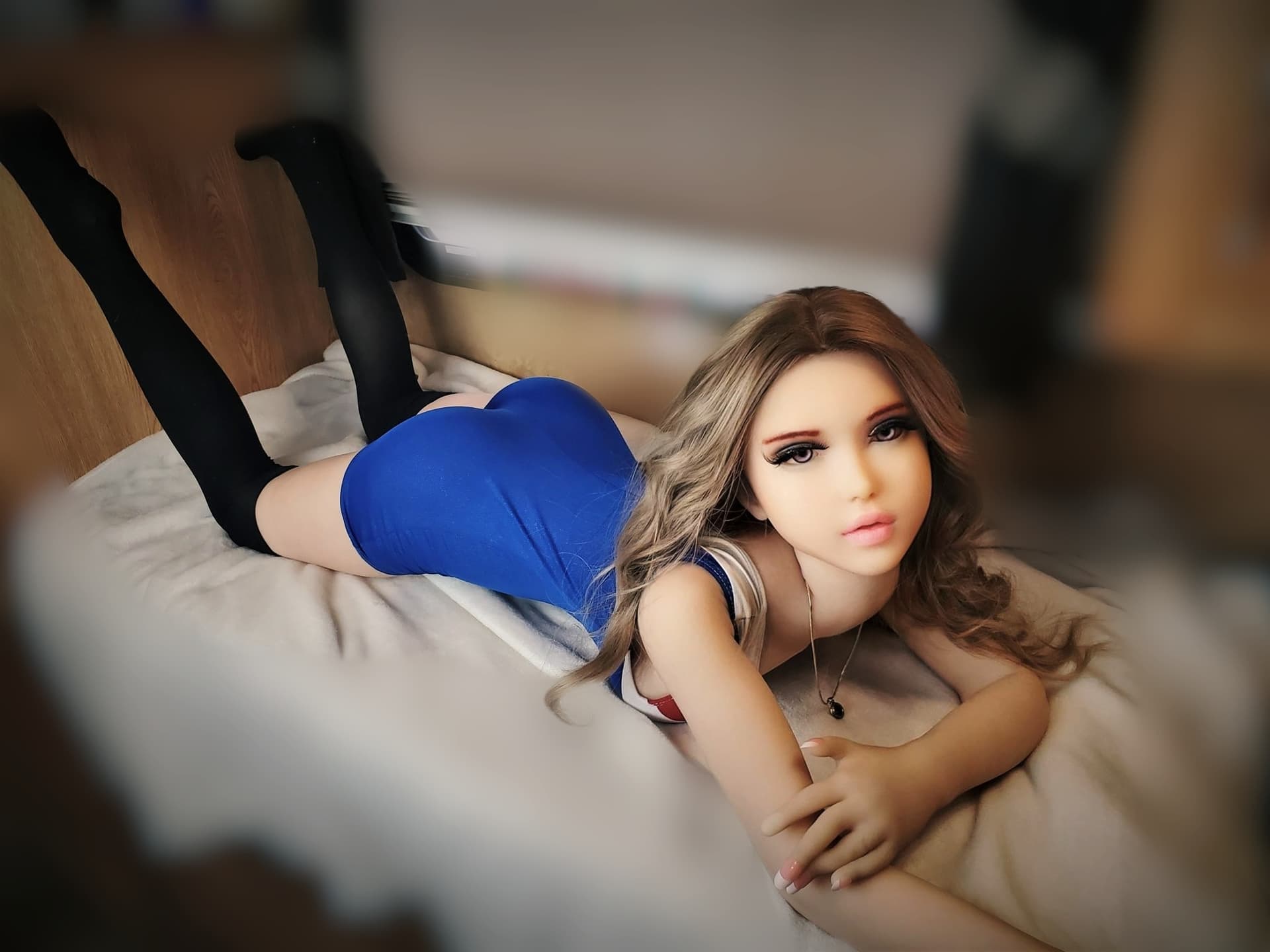
No, not the ones in your closet. I mean doll skeletons!
There’s always a lot of talk about TPE and silicone blends, and also the LHP discussion, but I haven’t seen a lot of discussion about skeletons.
This occured to me, because my WM 160A skeleton is loosening up by the day, and I’ve talked with a couple of WM 160A owners and they have the same problem. Then again, for example the WM 157B doesn’t seem to have this problem. (Not nearly as bad, at least.) I think the skeleton thing is something I knew existed when I purchased a doll, but I had no idea how dramaticly it affects the lifespan of a doll. That’s why I think it would be good to discuss about it more.
All doll skeletons loosen up eventually, but have you noticed some models that loosen up faster than others? And do you have any idea why that is?
And is there differences between manufacturers? Is there a doll manufacturer which has exeptionally good and durable skeletons compared to others?
Is it possible and worthwhile to repair / tighten up the skeleton?
Is there any other good points considering the doll skeletons?
thightening the skeleton is sure worth while make’s u enjoy her way longer
most use the same tech for the sceleton diffrence is EVO and EXP now as far as i know
My current dolls are a 4 year old SM where the skeleton has only loosened at the wrist and ankle. Still stands fine and all other joints holding well. The other is an 18 month old Sino which has slight loosening to the knees and hips but still strong.
All my TPE dolls in the past have suffered from degrading loose skeletons and have been removed from service because of this! Not saying silicone skeletons are better, this is just my personal experience.
I think the reason that skeletons from silikone dolls hold up better might be in the production process.
TPE is hot poured and whatever you use to keep joints tight like grease, lubricant or teflon cannot be used. You only have metal on metal connections which inevitably grind and loosen up.
Silicone might be a bit better as there is no heat involved and you could use washers which slow down the process.
Or a simple reason - more expensive dolls get more care and better skeletons who knows.
Skeletons are almost certainly the same between TPE and silicone in almost all cases (manufacturers). The cost and space required to stock multiple skeleton types just doesn’t make sense when they can (and do) get away with one. It is very likely that all skeletons from a specific (take your pick) manufacturer use all the same components and just the “spine” and “limbs” are cut to size from tube to create skeletons for different height models.
Weld failure is the most likely cause of sudden, complete failure. Most are poorly (tack) welded.
As Poppy mentioned, metal to metal wear at the joints is (should) be the (normal/expected) cause of looseness, because the fasteners are usually tack welded (to act as a “thread locker” in the factory tightened position) and should not be able to loosen themselves. When people “re tighten” joints, what they are most often doing is compensating for lost material (wear), not re tightening a fastener that worked it’s way loose.
High durability (ceramic etc.), super low friction (teflon etc.) or a combination/compromise (nitrided stainless etc.) bushings at the wear points would likely go a long way in keeping joints acceptably tight for longer.
Of course, better welds and upgraded joints cost more in production time and materials, which will have to be passed on to the customer. This makes these improvements unlikely to be implemented on TPE dolls or certain silicone dolls (who’s appeal is mainly low cost).
While there certainly are some manufacturers for whom this would most likely apply, a lot of silicone doll makers just simply don’t make any TPE dolls and hence are likely to have their skeletons specifically designed for silicone.
The manufacturers this applies to would probably be those that don’t have entirely separate silicone and TPE models, but let you order any model made with either material.
So far my best skeleton has been on my Piper 130cm TPE doll. Its smooth as butter and holds any position. Its an EVO skeleton. I love the ball jointed neck. that joint allows her to really keep her head up for poses (and such :))
Look at the neck in this Picture. Its really bent up. I would not keep it there for long but its an example of what this skeleton is capable of.
My Sinodoll knees have hyper extended. They want to bend the wrong direction. Here hips were so tight that i was originally lifting her by the ankle and this put stress on the knees. Too late now, however i lift by the calf now. All my other TPE dolls skeletons have come really loose but they can still stand and pose. Thanks RS
I really don’t think they are putting that much effort into it. Most don’t even put the effort in to get readily visible things like LHP right.
There likely is no difference between a TPE and silicone skeleton; there doesn’t have to be. Since they aren’t using specialized bushings (any bushings really), there is no need for special materials for one or the other (heat resistance for TPE, chemical resistance for silicone potentially). Similar to how the same components are used across multiple models in other industries (same engine in a Silverado as a Camaro, 90% + parts commonality). Parts commonality means, less design/r&d time, less space required to store parts, less effort in keeping track of multiple part numbers and ultimately more profit.
It is my suspicion that most (not all, like Starpery geared, XY Colo aluminum and a few others) are likely sourced from a subcontractor that supplies multiple manufacturers with the very same skeleton, with the only difference being spine/limb tube length. The same is likely true for articulated hands.
The problems remain the same though, complete failure will almost always be due to poor welds. Loosening joints will almost always be due to wear (material loss) at the contact wear points (root cause) rather than fasteners working loose (because they are usually locked in place with a tack weld).
From my experience the joints get loose over time because of movement. The more movement, the more likely they will loosen up.
I think that the weight of a doll has some influence too. The heavier they are the more movement in the joints. Even on joints that are not meant to be moved.
I have a DS/EX doll, her skeleton is far better than my other dolls.
I often read that a doll with loose joint is no longer usable. I think different here. A doll with loose joints can still do a lot of poses. Just no longer standing. My most comfortable doll for cuddling in bed is one with loose joints. I like that so much that I have already decided to not tighten the loosened joints of another doll.
In a way I think I understand what you mean. Almost all of Agnès’s limbs are now loose. You’re right, you can still take great photos sitting or lying down. What I personally like about Agnès in bed, I’m talking about cuddling, not sex, is that her feet move so smoothly, I can press against them and they move with my pressure and vice versa. This would also be possible with a real person, but with a new doll it would be very, very difficult to move her feet with just gentle influence…
Best skeleton that I’ve experienced is Sanhui. Moves so fluidly - not stiff, not loose. Enako’s been with me 2 years now and I’ve not noticed any loosening of the joints. Apart from having to repair her feet when she arrived due to damage in transit, she’s not needed any repair. And she’s been a very much well loved doll.
Ive had 2 wm166c bodies. Both from around a similar production time. One is 4yrs old with just a slightly loose hip. The other was a complete wreck after 12 months. . I guess to them its just a disposable product
Ball joint skeletons I like very much. Enako (my 2-year old silicone Sanhui) and Melina (my 4-year old TPE 6Ye) both have ball joint skeletons. And so far they are both going strong.
I understand that when the ball joint loosens repair is impossible (or at least very difficult.)
I have a ball joint skeleton too and I like it very much
I was going to write about the skeletons, but then the write box suggested this topic so I’m writing here instead. I own many dolls and I am very dissapointed of the skeletons. For example my 148 elsa babe suddenly like yesterday loosened her leg from pelvis down and can hardly stand now. Before that the back went 100% loose and wobbles left to right so only way to stand her is to put hand on the side to stop rotating either side.
The skeleton in all dolls are made as poorly as possible. They work with friction only and that is why they will loosen up. What I have calculated I can maybe use a doll around 50 times before it loosens and hafve to be cut open and tighten the bolts. This to me is unacceptable because the engineering so poor that I don’t even call it engineering just super lazy design.
There is ways to make the skeleton work some other ways than friction which is zero engineering stange. The reason why no manufacturer do this is becuase 1. they can sell dolls faster when other breks down 2. They don’t care to design proper skeleton becuase of reason 1.
I so fed up with this stupid as design that I really thinking if I’m going to buy antoher doll again until some manufacturer comes up with a proper skeleton that you don’t need to cut open in order to fix the stupid as designed skeleton.
Good news is that XT Doll at least seems to have started to do a skeleton that has locking joints which would prevent this lazy frcition “design” skeleton and thus prevent looseing of hte joints.
Something like this I will have with my next doll and nothing less. So fed up with this BS!!!
Specially opening silicone dolls is hard because the silicone glue is crap that can’t seem to handle tuffness at all since it’s so flexible. After I have tightened my elsa doll I don’t know how to seal it again if the silicone 2 component crap glue don’t work so she will look ugly AF!
That is why the skeleton should be properly designed since the cutting the doll leaves scars since it’s very hard to seal up agains properly. TPE is ok and can be done almost / 100%, but I haven’t worked with silicone, but 1 time and the glue didn’t do shit. I definelty suggest anybody who is becoming to first time doll owner of 2 golder rules that are 1. don’t buy doll that weight over 28kg 2. Buy S-TPE doll rather than super expensive silicone since the skeleton will get loose and silicone is alot harder to fix than S-TPE with TPE glue that melts some TPE and thus can really seal up the scra 100% perfectly when doing it slowly and carefully!
I have 2 DutchDoll dolls (Hilda and Isabella) and 1 SeDoll (Roisin). I’ve found that Roisin is very hard to maneuver. Her upper arms and upper legs are so tight that it’s a genuine struggle to get those in the position I want, which makes photographing hard work. Once she’s ‘in place’ it’s great, but the difference with Isabella is downright shocking.
Maybe this is a one off thing with Roisin but good grief, getting her to simply sit up straight is serious effort.

 who knows.